


This article is part of a series celebrating Womble Bond Dickinson’s 150th anniversary and reflecting on the firm’s enduring legacy of service to the law, its clients, and the communities it serves.
The 1950s and ‘60s are remembered today as a time of great progress for civil rights in America. But at the time, it came at a high price, particularly paid by Black citizens who demanded equal and just treatment under the law.
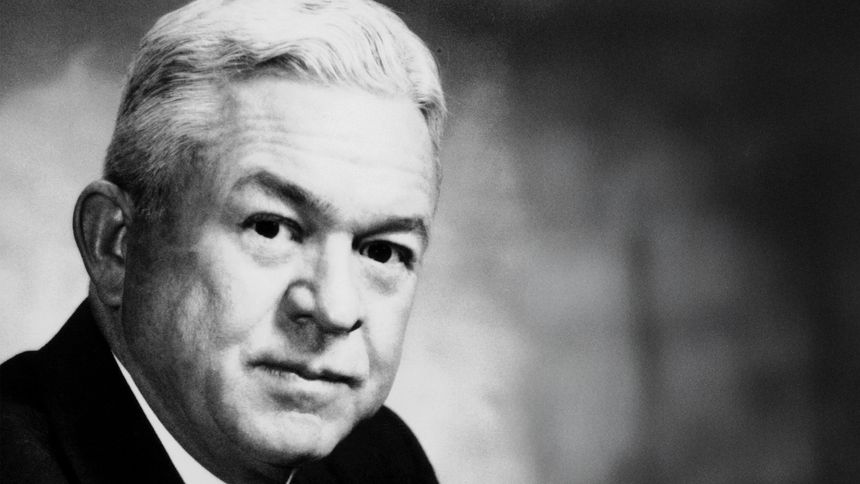
It took courage for established leaders to speak out in support of civil rights. But Irving Carlyle was one of those leaders.
Carlyle joined the firm now known as Womble Bond Dickinson in 1923 and would later become a named partner of Womble Carlyle Sandridge & Rice, before the firm’s evolution into its current form. The Wake Forest College and World War I veteran not only carved out a thriving legal practice in Winston‑Salem, he also became deeply entrenched in North Carolina politics. Carlyle was elected to the North Carolina State Senate in the 1940s and served on several state‑level boards. He was appointed as a delegate to the 1952 Democratic National Convention, a testament to how respected the man nicknamed “Mr. Democrat” was in political circles.
In 1954, the U.S. Supreme Court issued its landmark school desegregation decision in Brown vs. Board of Education. Many white residents opposed desegregation, and elected officials in the state devised plans to postpone or minimize school integration.
Three days after the Supreme Court’s decision, Carlyle was scheduled to deliver the keynote address at the State Democratic Convention. His prepared remarks seemed typical for such a speech—firing up the delegates for the fall election, emphasizing the Democrats’ recent accomplishments and drawing clear contrasts with the opposing party.
But at the last minute, he inserted some remarks that would become the most famous of his long and legendary career. He told the assembled party members:
“The Supreme Court of the United States has spoken. As good citizens we have no other course except to obey the law as laid down by the court. To do otherwise is to cost us our respect for law and order, and if we lose that in these critical times, we will have lost that quality which is the source of our strength as a state and as a nation.”
In the years to follow, Carlyle remained steadfast that North Carolina should move forward with integration. His daughter, Mary Irving Campbell, remembered her father receiving threatening letters and phone calls. But he didn’t back down.
Many Black leaders in North Carolina faced far harsher consequences. Several, including famed civil rights attorney Julius Chambers, had their houses bombed after advocating for integration. But Carlyle’s stance came at a cost. One of North Carolina’s U.S. Senate seats was vacant in 1954, and Carlyle was on the short list of candidates.
However, many in the state felt his vocal support for abiding by the Supreme Court’s decision made him unelectable, and he was passed over for the Senate seat.
/Passle/68e962779056145137a828ff/MediaLibrary/Images/2026-06-05-20-59-19-409-6a2338a7cd47d80c76815a50.jpg)
/Passle/68e962779056145137a828ff/MediaLibrary/Images/2026-06-05-21-00-32-666-6a2338f0e67033d62f4379a4.jpg)
/Passle/68e962779056145137a828ff/MediaLibrary/Images/2026-06-05-20-59-47-557-6a2338c3cd47d80c76815c04.jpg)